Beef Consumption Statistic in the Us
Livestock feed is a significant use of both corn and soybeans. Xl per centum of the domestic corn ingather and over 60% of domestic soybean product are used as livestock feed (April 2021 USDA WASDE). Beast agriculture is obviously important to the need for corn and soybeans, with meat consumption existence the major production of creature agronomics. Herein, we detail the per capita consumption of meats in the U.S. Focus on meat consumption is warranted given the recent climate, ethical, and health considerations facing the meat industry. The potential impacts of these evolving factors are hard to quantify and volition most certainly fluctuate in importance and influence. All the same, examining past patterns tin provide benchmarks and expectations for meat demand and livestock feed use over the adjacent decade.
Current Consumption
Figure i shows per capita consumption of meat in the U.S. from 1999 to 2020. Over the entire period, meat consumption averaged 252 pounds per person. There were, nonetheless, trends in the data. Per capita consumption was relatively stable from 1999 to 2006. From 1999 to 2006, meat consumption averaged over 250 pounds per person. Then, meat consumption cruel from 2007 to 2013, reaching a low of 235 pounds per person in 2014. From 2015 to 2019, per capita consumption increased each year, reaching 264 pounds per person in 2020.
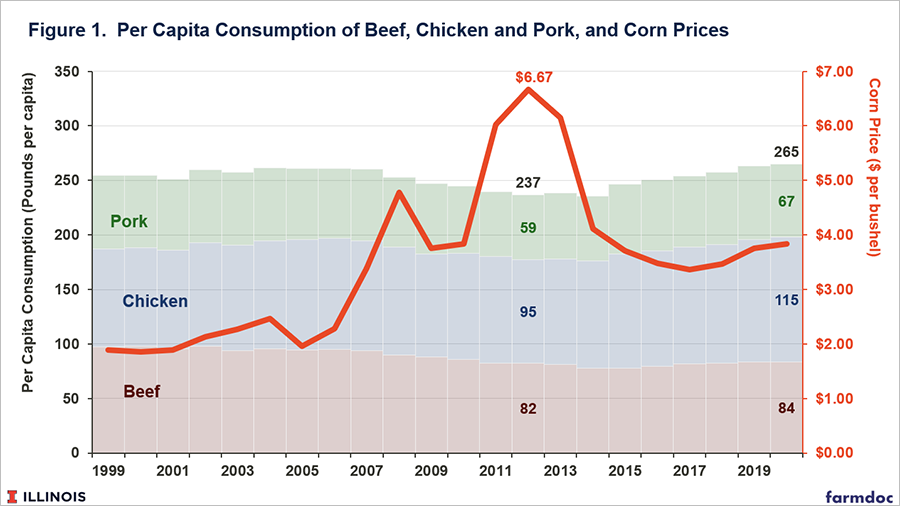
2 items contributed to the decline in per capita consumption in the period from 2007 through 2016. Offset, ethanol product began its build in 2006 to 2013. Increasing utilize of corn in ethanol generally led to higher corn and soybeans prices. Besides contributing to price increases were low corn yields in 2010 through 2012. Effigy one contains a line giving yearly corn prices during this catamenia, illustrating the human relationship betwixt college prices and per capita consumption. Over the 1999 to 2019 time period, per capita consumption and corn prices had a -.74 correlation coefficient.
Second, at that place was the Swell Recession of 2008, which caused lower dispensable incomes. Reductions in incomes typically pb to lower meat consumption.
Shifts in Consumption
There has been a switch in consumption across the three major meat categories. In 1999, beef had more consumption than chicken or pork. Over the time period, beef consumption declined from 97 pounds per capita in 1999 to 83 pounds in 2020. Pork consumption has remained relatively stable, equally 68 pounds per capita in 1999 and 67 pounds per capita in 2019. Chicken consumption increased from 89 pounds per person in 1999 to 112 pounds per person in 2019. Chicken now has higher per capita meat consumption over beefiness and pork.
Shifts in per capita meat consumption will have noticeable impacts on feed use. Compared to a broiler feed conversion ratio of around ii-to-1, commercially produced beef cattle typically convert feed at a ratio of vi-to-1. Bold that consumers volition keep to replace beefiness with craven in their diets, the amount of feed input used per pound of meat consumed will decrease.
Implications
Overall, U.S. consumption of meat is relatively stable, temporally influenced past the economic science of feeding livestock and general economic conditions. Economic growth in the U.S. could increase meat consumption marginally, but large increases should non be expected. Every bit a result, domestic meat consumption likely will not be a driver of increased corn and soybean consumption. If anything, feed demands for domestic consumption will probable decline with a connected switch to chicken consumption. Increases in livestock feeding efficiency volition further reduce demand.
Yields of corn and soybeans probable will continue to increment in the time to come. Given that per capita consumption of meat volition not abound, increased demand will have to count on exports and other uses. Exports of meats could be a growing use of corn and soybeans.
Disclaimer: We request all readers, electronic media and others follow our citation guidelines when re-posting manufactures from farmdoc daily. Guidelines are available here. The farmdoc daily website falls under University of Illinois copyright and intellectual property rights. For a detailed statement, please meet the Academy of Illinois Copyright Data and Policies here.
Source: https://farmdocdaily.illinois.edu/2021/05/an-overview-of-meat-consumption-in-the-united-states.html
0 Response to "Beef Consumption Statistic in the Us"
Post a Comment